
You've built a career.
It doesn't fit anymore
You're just not sure it's still yours
Most careers don't fall apart in one dramatic moment. They erode slowly, one adapted meeting, one swallowed opinion, one "that's fine, I'll manage" at a time.
You took the next step because it was there, and you were good enough to take it. You kept saying yes to what made sense on paper. And somewhere in the last ten or fifteen years, the question of what you actually wanted got quietly set aside. Not decided against. Just shelved.
Now you're doing work that looks right from the outside. You get results. People rely on you. And you still find yourself wondering whether any of it is quite true, whether you got here because you're good, or because nobody's checked closely enough yet.
That's not a confidence problem you can think your way out of. It's usually something more specific. And it's solvable, once you know what you're actually looking at.
Who I work with
I work with researchers, leaders, HR professionals and specialists, usually ten to twenty years into a career they've built carefully and are still good at. Most of them are used to being the reliable one. Most of them are tired in a way that doesn't fully lift on weekends.
The issue is rarely a skills gap. It's closer to this: you've spent so long meeting expectations that you've lost clear access to what actually works for you, what drains you, and what you're for.
What I hear:
"I've worked hard for years and I still feel like I'm one mistake away from being found out."
"I'm exhausted. But I can't tell if I'm burning out or finally seeing something clearly."
"I do good work. I can't figure out why it doesn't seem to count."
"Something has to change. I don't know if it's me or the job, and I don't know how to find out."
"I've spent so long adapting to what's expected that I'm not sure what I actually want anymore."
"My body's been telling me something for a while. I just haven't been ready to listen."
What's actually going on
Most career conversations stop at the practical questions. What role, what sector, what's next. They rarely get to what's actually sitting underneath.
For a lot of people, that's previous negative experience and emotional pain quietly shaping how the present looks: a decade spent optimising for a plan that was never really yours, a parent's expectations, an industry's definition of success. It's exactly where my background comes in, I work with this in a structured way, and bring that same approach to career and identity.
There's often a quieter disappointment sitting alongside it too, a sense of being somewhere you didn't expect to still be, doing work that doesn't fully reflect what you're capable of. That's usually connected to years of doing good work without anyone properly registering it, including, eventually, yourself.

What it costs at home

There's a cost to this that rarely makes it into a coaching conversation. When you spend your working hours performing a version of competence that isn't quite natural to you, you come home used up in a specific way, not just tired.
Over time, that can show up as less patience with those dear to you, less energy to play with the children, walk the dog, or keep up a hobby that used to matter, fewer appointments with friends and extended family, less energy for what makes you you.
Often, the body says something before anyone does, recurring illness, exhaustion that doesn't lift between projects, a flatness that isn't quite depression but isn't fine either. Most people stop there though, at the symptom itself, without connecting it back to what's actually driving it. That's not a lack of insight. It's simply not how most of us have been taught to look.
Is it me, or is it the job
For a lot of the people I work with, the real question isn't how to function better where they already are. It's whether they should still be there at all.
That's rarely about salary or title. More often it's a slow-growing sense that the work no longer reflects who you've become, or that you've spent years optimising for someone else's version of a good career, a parent's, an industry's, your own twenty-years-younger idea of what mattered. And it's rarely obvious from the outside. You can be doing well, getting results, and still feel like the fit has quietly gone wrong somewhere underneath all of it.
None of that means something has to change. Sometimes the answer, once you've actually looked at it, is that the job is still right, just under more pressure than usual right now. But you can't get to that answer by pushing through and hoping the feeling passes. You get to it by taking the question seriously enough to examine it properly, with the right tools, rather than guessing.

For introverts

Introversion isn’t a problem to solve. But it does shape how you work, what drains you, and what kind of environment lets you do your best thinking — and most introverted professionals have never had that conversation in a career context.
Many ended up in roles that don’t fit — not from lack of ambition, but because they never examined what fit actually means for someone like them. They chose what was available, what was sensible, what didn’t require too much visibility.
Others are good at their jobs — but spend every evening recovering from the day. They over-prepare for meetings they could handle in their sleep. They have more to contribute than they show. And they’re quietly tired of the gap between what they know and what they manage to say out loud.
None of that needs fixing. But it does need accounting for — so the career you build from here is built around who you actually are.
For leaders
Most leaders didn't choose their leadership style. They inherited it, from whoever modelled leadership first, a manager they admired, a culture that rewarded a particular way of showing up, an early boss they were determined not to become. That style got reinforced with every promotion, and somewhere along the way it stopped feeling like a choice at all. It just became how you lead.
The trouble is when that inherited style doesn't actually match how you think or work best. You end up performing a version of leadership that gets results but costs you more than it should, over-preparing for decisions you're qualified to make on instinct, second-guessing a call the moment it's out of your mouth, treating confidence as something you have to project rather than something you already have evidence for.
Some leaders find this shows up as exhaustion that doesn't track with the actual workload. Others notice it as a strange gap between how capable they know they are and how uncertain they feel making the calls that come with the role. Both usually point to the same thing: a leadership style that was never fully examined, just adopted and carried forward.
None of that needs fixing in the sense of starting over. But it does need examining, so the way you lead is actually built around how you think, not around whoever you were copying when you started.

How we work
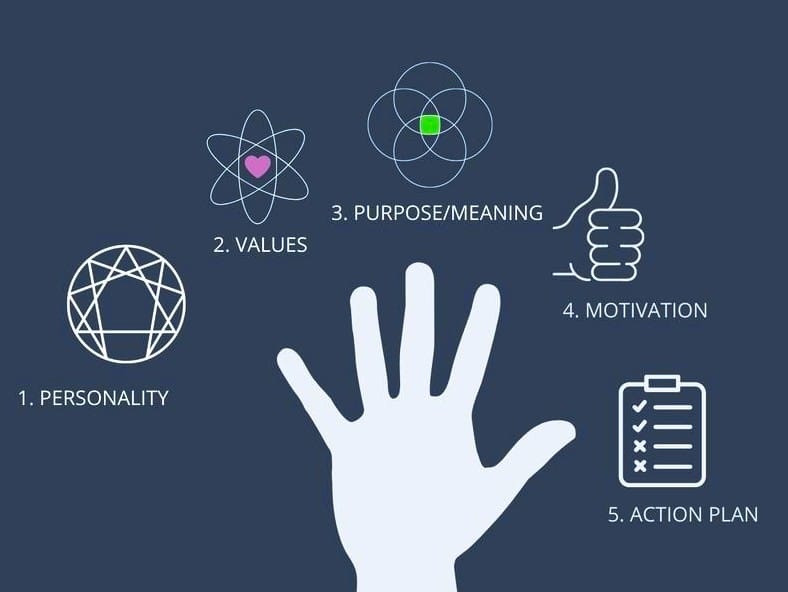

I'm a certified coach and grief-informed counsellor, and I work in a structured way. I bring evidence-based tools into the process where they fit. That means we don't just talk about what's happening, we map it, find what's actually driving it, and build something concrete from there. Vague reflection doesn't hold up once you're back in the middle of a demanding week, so the process is built to be more precise than that.
The full method runs through five distinct layers, from how you're actually wired to work, through to a concrete action plan you can act on rather than a wishlist you file away. [Read more about how
Read more about the Cornerstone programme
What clients say
Working with Mette gave me the tools and skills I needed to become a better leader, and it also helped me reflect on the kind of leader I want to be. I’m grateful for the time and opportunity to learn from such an experienced coach.”
Male client
Professor
As a senior female leader in a male-dominated company, I face unique professional and personal challenges. Mette demonstrated a deep understanding of the complexities that come with leadership, gender dynamics, and workplace pressure. Through our work together, I gained valuable strategies to navigate confidence and self-advocacy while staying true to my values. Her insight, professionalism, and genuine care have made a profound difference to my effectiveness as a leader.”
Female client
CFO
I’ve learned to accept my weaknesses as strengths — as strange as that might sound. The fact that I’m empathetic and sensitive is exactly what makes me good at my work. That’s a genuinely freeing thing to understand.
Male client
Middle manager
Next step
If you want to find out whether I can help, reach out and we'll find a time to talk.

© 2026. All Rights Reserved
K.P. Danøsvej 3 | 4300 Holbæk | Denmark | CVR nr. 27531385 | +45 26 18 61 90